
China Observations

Summary
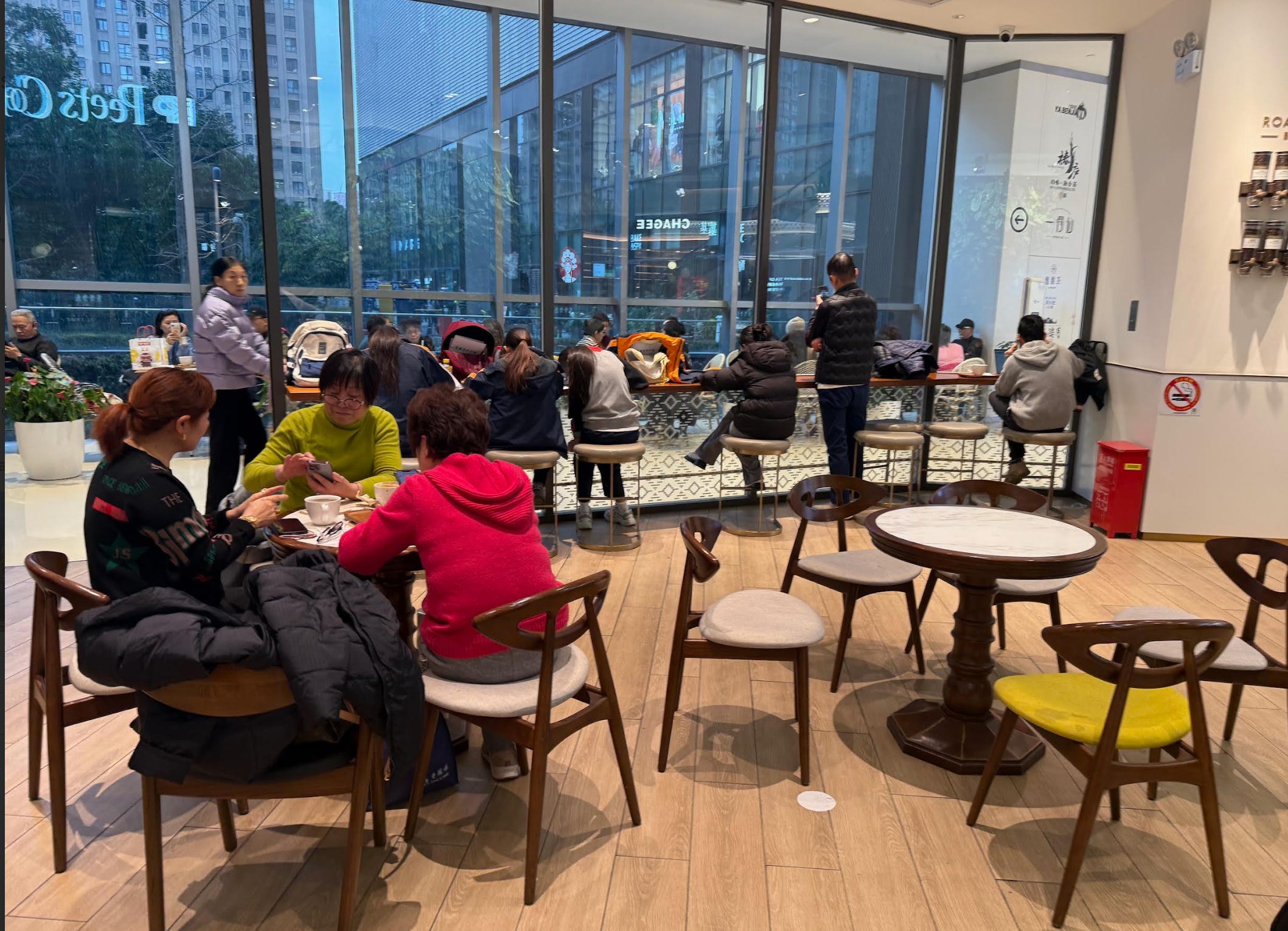
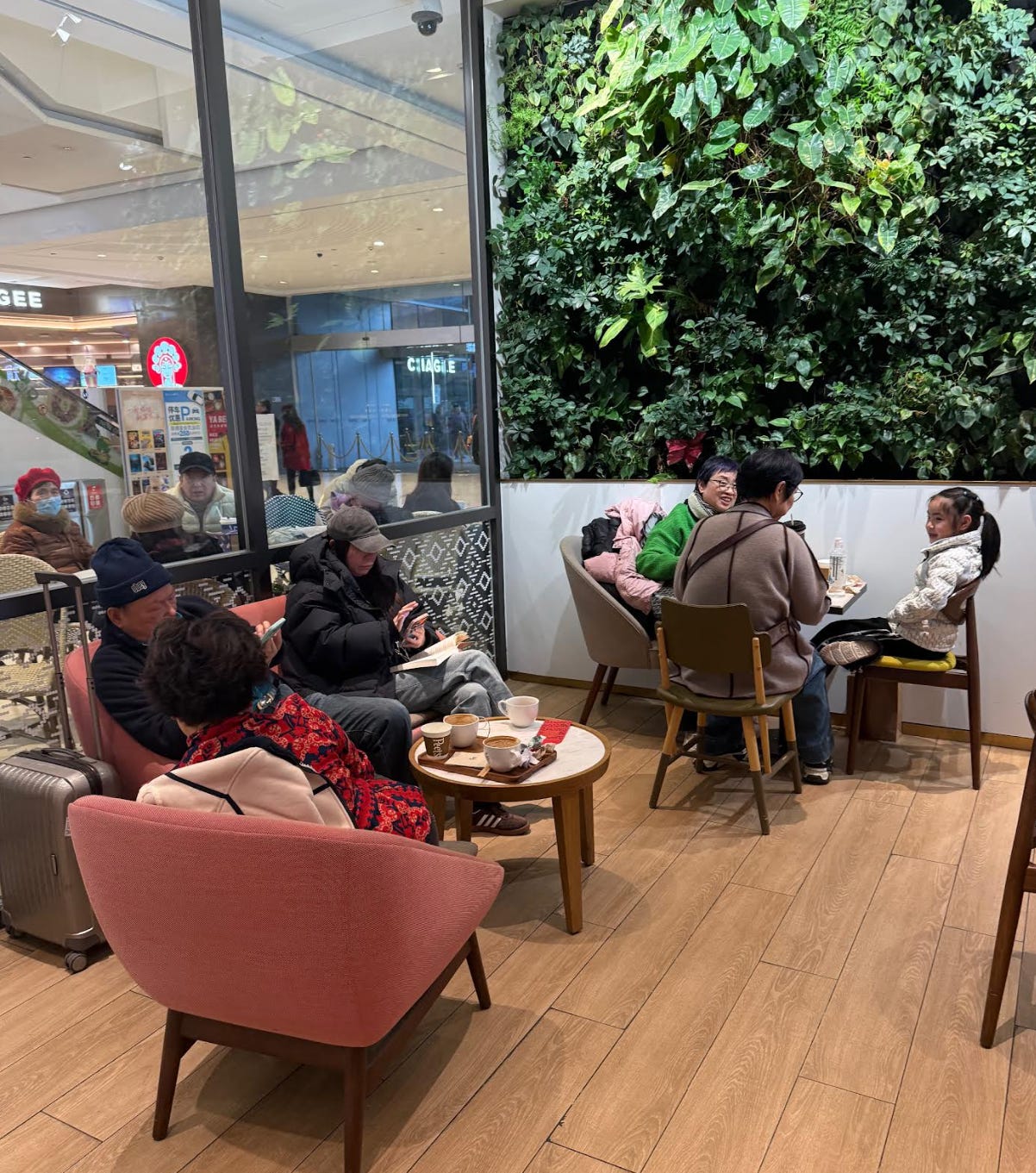
Confidence is a big part of the game, and it feels like the average person has made peace with the new normal. Coffee shops are packed. Consumer energy feels back, and people seem confident again.
On the tech front, research talent is genuinely world-class. VCs are busy again (from 2-3 deal ICs a month to ~20 ICs a week), valuations are moving up, and the IPO window looks at least as open - arguably more open - than the US.
Beijing is deliberately ending “involution.” Rolling back export-side support is a bigger deal than people realize: less dumping, faster industry consolidation, fewer survivors - and China may be shifting from exporting deflation to exporting inflation.
Real estate is still a washout, but we’re starting to see glimpses that the cycle could bottom once negative carry compresses.
Healthcare: a real speed/execution advantage is emerging (more below).
The most crowded investment areas I kept hearing: consumer hardware, aerospace, robotics, and domestic substitution for chips. Each could produce multiple multi-baggers - and the A-share market is very welcoming to tech companies.
Voice is a lot more dominant in China than the US. I heard estimates like ~30% of Doubao queries are voice. In EVs (80%+ of new car sales), voice command is the default UI.
Society is much more contactless. Even boarding and identity flows feel closer to “walk through” than “show documents.”
Involution -> exporting inflation
Beijing is deliberately ending “involution.” The message is: no more endless capacity expansion, no more competing purely by bleeding margin.
The policy direction is cut capacity / accelerate exit for marginal players - moving from exporting deflation (ultra-low priced goods shipped abroad) toward less deflation export, and potentially some inflation pass-through.
Export VAT rebate rollback matters more than people think
Remove or reduce export-side support is a big deal. Starting April 1, 2026, China is rolling back export VAT rebates in key categories - e.g., solar PV export rebates reportedly go from 9% to 0% immediately, with similar cuts hitting parts of the battery supply chain.
In many of these businesses, margins are thin enough that losing a ~9% rebate means some combination of price increases, consolidation, or exit.
Translation: less dumping-style price competition, faster industry consolidation with fewer survivors - and potentially exported inflation rather than deflation.
Europe is also putting a floor under pricing
For EVs in Europe, the EU is actively pursuing variants of a “minimum price” approach to prevent Chinese EVs from flooding the market.
Net effect: even if China wanted to dump, the destination market is trying to enforce discipline.
Macro framing
China has unusually strong “control knobs” over its industrial economy, so the sequence likely looks like:
PPI turns first
then CPI follows
The system looks like it’s trying to pull itself out of a deflationary spiral via capacity discipline + pricing normalization.
Consumer confidence feels back (but K-shaped)
Consumer confidence seems meaningfully improved. Shanghai IFC Mall traffic is strong; regular cafes are packed with middle-class families and afterschool kids.
A key driver is the stock market wealth effect: the Shanghai index being up sharply since the Oct-2024 lows has made “hope” feel investable again for a lot of people.
The right frame is K-shaped - but the average mood feels less defensive than the last few years.
Aging population, urbanization basically done
As of end-2025, 67.89% of China’s population lives in urban areas (permanent residents), roughly 954M urban permanent residents.
It’s not “100% urban,” but if you exclude elderly populations who aren’t realistically moving, the country is functionally late-stage urbanized.
The bigger structural issue is demographics: China’s youth cohort is smaller, and the working-age base is large but shrinking.
Healthcare: me-too → best in class!
Regulatory modernization: China has moved closer to global drug-development standards, improving predictability and baseline quality in trials/CMC/filings.
Clinical execution advantage: huge patient pools + dense hospital networks + mature CRO ecosystem = faster enrollment and faster iteration. That speed is a real edge in reaching best-in-class outcomes.
Talent + manufacturing/process engineering is a durable advantage.
Capital cycle -> discipline: 2020-21 funded lots of shots; 2022-25 forced teams away from me-too and toward differentiation and globally marketable assets.
Globalization via licensing: more teams build to global standards and validate via license-outs/partnerships with multinationals - a positive feedback loop.
Why more “best-in-class” than “first-in-class”: China’s edge is execution speed and optimization (ADCs, bispecifics, improved TKIs). The first-in-class gap is narrowing in select pockets, but the comparative advantage is still “win within known modalities.”
Real estate: potential recovery in sight
4Q25 felt like a washout - a classic late-cycle capitulation where expectations finally reset and nobody wants to touch it.
The fulcrum is carry: in some regions, rental yield ~1%-2% vs mortgage ~5%-6% means structurally negative carry - you’re literally paying to hold the asset.
There’s a clear precedent in Hong Kong: HK housing worked its way out of negative carry over the last ~2 years as mortgage rates spiked in 2022-2023, then rolled down through 2024-2025.
If China can reset mortgages toward ~3%, and yields drift toward ~2%, carry becomes roughly neutral (“on par”). That’s usually the inflection point where transaction velocity returns and sentiment stops getting worse. China is already discussing subsidizing mortgage interest - you don’t need a boom, just “not bleeding” to restart demand.
China consumer hardware
China consumer hardware is shifting from “supply chain” to product definition + global brands. A huge share of Kickstarter launches are Chinese teams.
The success of Bambu Lab, EcoFlow (portable power), and Insta360 (action/360 cameras) shows China can win globally with product + software.
Shenzhen (esp. Nanshan) is a “consumer hard-tech productization engine” - fast loop from R&D to prototyping to small-batch precision manufacturing.
Things I’d watch:
desktop CNC / precision machine tools
imaging products moving toward auto photography (object/bird recognition), plus niche modes like astronomy / long-range
hobbyist categories
“human augmentation” as a consumer category: robots as wearables + assisted mobility
Pictures taken in a random coffee shop in Shanghai - it’s the avg ppl who are hanging out:
Great analysis. I think you're right about the push to stop price wars, but the reality of fiscal deficits is also a huge factor. China is effectively raising taxes broadly this year simply because the government is short on cash. It raises an interesting question: Can removing fiscal support actually help solve a deflationary cycle? It will be interesting to watch.
Welcome back, and I wish you a smooth journey!